USDJPY Sentiment: Sellers Losing Steam — Short-Term Buy Setup?
USDJPY: Diminishing Selling Pressure Points to Short-Term Reversal
Something interesting is happening on USDJPY sentiment. Two selling waves, but the second one is telling a very different story.
📊 What The Sentiment Shows:
Looking at the USDJPY Long/Short sentiment chart over the past 5 days, two distinct selling phases stand out:
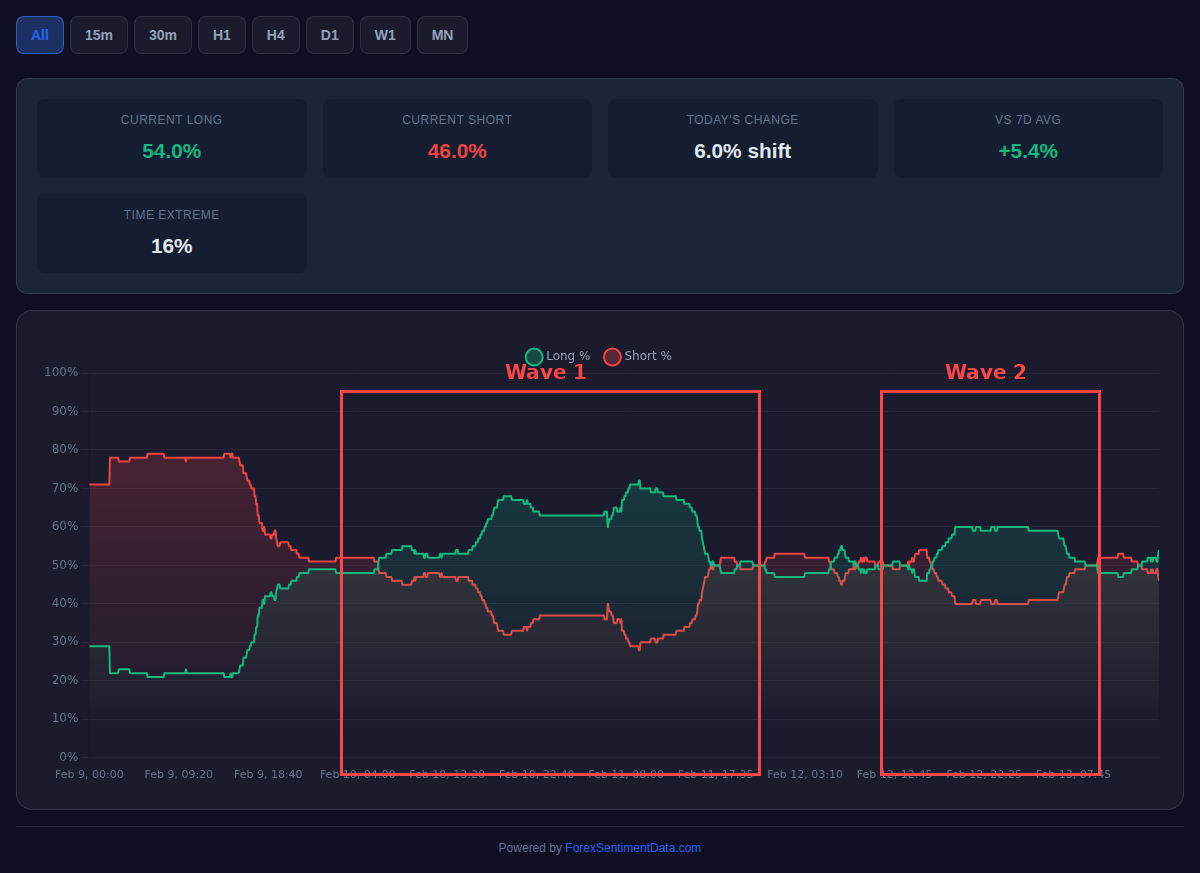
Wave 1 (Feb 10–11): The Big Push
- Retail buy sentiment surged — traders piled into longs
- Despite the bullish crowd, price dropped significantly
- Classic retail trap: the majority bought, the market sold
Wave 2 (Feb 12–13): The Weak Follow-Through
- Buy sentiment rose again — retail traders still leaning long
- Price dropped again, but this time failed to break the Wave 1 low
- Same bullish retail positioning, but less downside follow-through
- Selling momentum is fading despite persistent retail long bias
🎯 Why This Matters:
In both waves, retail traders positioned long — yet price fell. But here's the key: in Wave 2, the same bullish retail positioning produced a smaller decline that couldn't break the previous low. This is a sign that:
- The selling force behind the counter-retail move is weakening
- Buyers (likely institutional) are absorbing selling pressure at these levels
- The market may be running out of room to punish retail longs
⚡ Short-Term Outlook:
This pattern suggests a potential short-term buy opportunity on USDJPY. The diminishing selling waves indicate that bears are running out of momentum, and a relief bounce is likely.
Key levels to watch: If the previous low holds and sentiment starts flipping back toward long, that confirms the exhaustion thesis. A break below the prior low invalidates this setup.
Not financial advice — sentiment is one piece of the puzzle.